Containerised Effluent Treatment Plant India
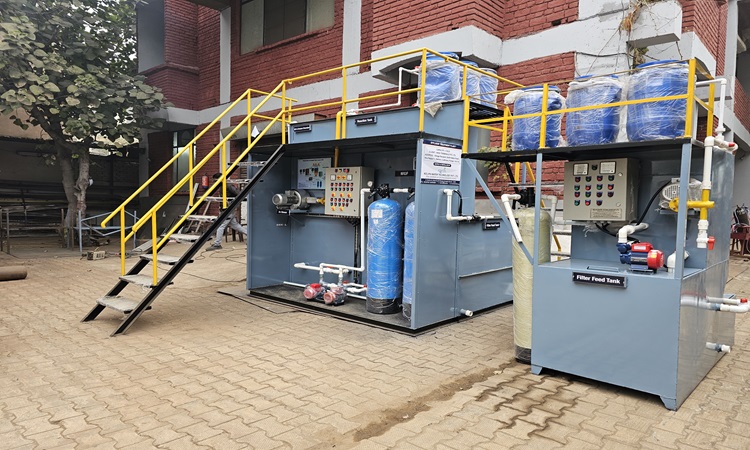
Industrialization and urban expansion in India have rapidly increased water demand and wastewater generation. Regulatory frameworks such as the Water (Prevention and Control of Pollution) Act and Environment Protection Rules mandate pre-treatment of effluent before discharge or reuse. In this context, Containerised Effluent Treatment Plants are emerging as efficient, modular, and scalable wastewater solutions across sectors. This article explores containerised ETPs — their design, advantages, applications, regulatory compliance, challenges, and the role of Kelvin Water Technologies in advancing wastewater treatment in India.
What is a Containerised Effluent Treatment Plant?
A Containerised Effluent Treatment Plant is a compact, factory-assembled wastewater treatment solution housed within one or more standardized shipping containers (typically 10ft, 20ft, or 40ft). Unlike traditional masonry ETPs built on-site, containerised ETPs are fully fabricated, pre-tested, and delivered ready for installation.
These systems integrate a series of treatment units — such as screens, equalization, aeration, clarification, filtration, and sludge handling — within a confined structure. The modular design enables easy relocation, scalability, and rapid deployment.
Why Containerised ETPs are Ideal for India?
India’s diverse industrial landscape — from textiles, chemicals, tanneries, pharmaceuticals, food processing, and metal finishing to refineries and small-scale units — generates varied effluent streams. Containerised ETPs offer key advantages:
1 Compact Footprint
Space constraints in industrial zones and urban facilities make traditional ETP construction challenging. Containerised plants maximize treatment capacity with a minimal footprint, ideal for sites with limited land availability.
2 Rapid Deployment
Since these systems are pre-fabricated, they significantly reduce installation time compared to conventional on-site construction. This is particularly advantageous for:
- Expanding facilities
- Temporary or seasonal operations
- Emergency wastewater compliance requirements
3 Plug-and-Play Design
Containerised ETPs arrive pre-wired, pre-plumbed, and pre-commissioned, requiring minimal site preparation. In many cases, only civil foundation, inlet/outlet connections, and power supply are needed.
4 Scalability and Flexibility
Modular container units can be stacked or linked to meet increasing capacity demands. Industries can start with a basic configuration and expand treatment trains as needed.
5 Mobility
The container format allows relocation to new sites or temporary plants — perfect for construction sites, mobile service providers, and disaster-response applications.
6 Cost-Effectiveness
While upfront costs may be similar or slightly higher than traditional ETPs, the reduced civil work, faster installation, and lower operational downtime contribute to long-term cost savings.
Core Components of Containerised ETP
A containerised ETP typically includes:
1 Inlet & Bar Screening
Removes coarse solids, plastics, rags, and other large debris, protecting downstream equipment.
2 Equalization Tank
Balances flow variations and homogenizes wastewater characteristics to improve treatment efficiency.
3 Primary Treatment
Processes like sedimentation and oil–water separation remove suspended solids and free oils.
4 Secondary Treatment
Biological processes — activated sludge process (ASP), sequencing batch reactors (SBR), moving bed biofilm reactors (MBBR), or membrane bioreactors (MBR) — degrade organic pollutants.
5 Tertiary Treatment
Advanced polishing using sand filtration, activated carbon, ultrafiltration (UF), or disinfection (UV/chemical) to meet stringent discharge/reuse standards.
6 Sludge Handling
Mechanical dewatering with filter presses, centrifuges, or drying beds reduces sludge volume before disposal.
7 Automation & Controls
Programmable Logic Controllers (PLCs), automated dosing, and online monitoring ensure stable operations with minimal manual intervention.
Compliance with Indian Regulations
Industrial units in India must adhere to discharge standards set by regulatory bodies like:
- Central Pollution Control Board (CPCB)
- State Pollution Control Boards (SPCBs)
- Sector-specific guidelines for tanneries, textiles, chemicals, and food processing
Containerised ETPs are engineered to produce treated effluent quality within prescribed limits, ensuring compliance for parameters such as:
- BOD (Biochemical Oxygen Demand)
- COD (Chemical Oxygen Demand)
- TSS (Total Suspended Solids)
- Oil & Grease
- pH
- TDS and heavy metals (when applicable)
Applications Across Indian Industries
The adaptability of containerised ETPs makes them suitable for:
1 Textiles & Dyeing
High-color effluent laden with surfactants and dyes requires robust biological and physico-chemical treatment.
2 Pharmaceuticals
Complex organic loads with variable toxicity need reliable and consistent treatment to protect aquatic life.
3 Food & Beverage
Effluent with high BOD and TSS from washing, processing, and cleaning benefits from combined aerobic and anaerobic systems.
4 Metal Finishing & Electroplating
Heavy metals and cyanides call for specialized tertiary processes before discharge.
5 Construction and Housing Projects
Temporary containerised ETPs can treat wastewater from labor camps and site activities.
Kelvin Water Technologies: Redefining Wastewater Treatment
Kelvin Water Technologies is a trusted name in India’s wastewater treatment sector, offering end-to-end solutions for effluent treatment and zero liquid discharge (ZLD) systems. With deep technical expertise and over a decade of experience, Kelvin delivers:
- Customized Containerised ETP Solutions calibrated for specific industrial needs
- Advanced Biological and Membrane Technologies for superior treatment efficiency
- Automation, IoT, and Remote Monitoring Capabilities to streamline operations
- Turnkey Engineering, Procurement, and Construction (EPC) Services
Their containerised ETPs are engineered to meet the diverse requirements of Indian industries, ensuring robust performance, regulatory compliance, and cost-effective operation. Kelvin’s focus on sustainability aligns with India’s vision for water reuse, resource recovery, and environmental stewardship.
With a dedicated R&D team and service network, Kelvin Water Technologies supports clients from system design to commissioning and after-sales support, making them a preferred partner for wastewater solutions across sectors.
Future of Containerised ETPs in India
The containerised ETP market in India is poised for strong growth due to:
- Increasing industrial wastewater generation
- Stricter regulatory enforcement
- Rapid adoption of modular and digital wastewater technologies
- Emphasis on sustainable water management and reuse initiatives
Conclusion
Containerised Effluent Treatment Plants represent a modern, efficient, and scalable solution for industrial wastewater challenges in India. Their compact design, rapid deployment, and adaptability make them ideal for diverse industrial applications. With companies like Kelvin Water Technologies leading innovation and implementation, Indian industries can achieve regulatory compliance, operational excellence, and sustainable water management with confidence.