Organic Waste Composting Machine Manufacturer
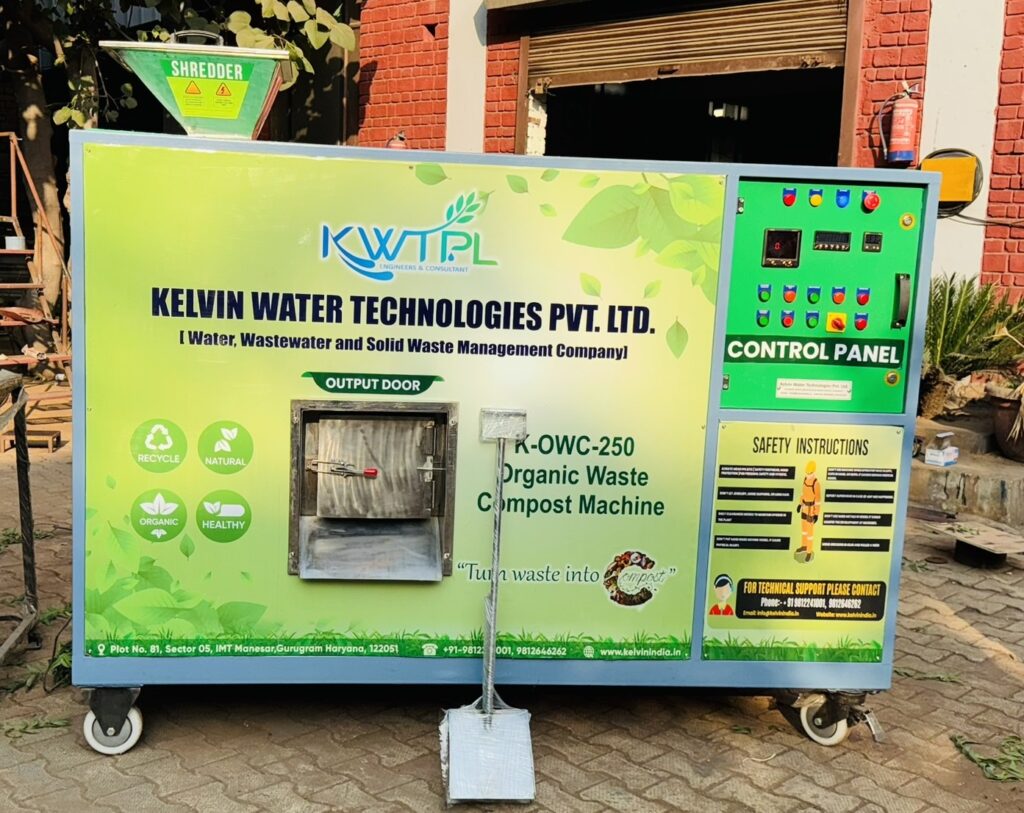
Organic waste — comprising food scraps, vegetable peels, garden waste, market leftovers, and other biodegradable materials — forms a significant portion of municipal solid waste worldwide. If left unmanaged, organic waste decomposes in landfills and open dumps, releasing greenhouse gases like methane and causing foul odours, pest infestations, and environmental degradation. To tackle this challenge, innovative technologies such as Organic Waste Composting Machines (often referred to as OWC machines) are increasingly adopted across residential societies, commercial establishments, industries, and municipalities.
An organic waste composter machine is a technologically advanced system designed to accelerate the natural composting process, converting biodegradable waste into nutrient-rich compost rapidly, often within 24–48 hours. These machines play a pivotal role in transforming waste into valuable resources, lowering landfill pressure, and paving the way toward a circular economy — where waste becomes an asset rather than a burden.
What Is an Organic Waste Composting Machine?
An Organic Waste Composting Machine (or Organic Waste Converter) is an engineered solution that automates the process of breaking down organic matter into compost through controlled aerobic decomposition. While traditional composting can take weeks or months, modern OWC machines leverage technology — including shredding mechanisms, temperature control, moisture sensors, and automated aeration — to significantly speed up the process.
Typical features and functions include:
- Shredding unit: Reduces waste size, increasing surface area for microbes.
- Mixing system: Homogenises waste for uniform composting.
- Temperature and moisture control: Ensures optimum conditions for microbial activity.
- Odour control units: Prevents foul smell during operation.
- Automated PLC interface: Enables one-touch operation and controlled processing cycles.
Evolution of Organic Waste Composting Technology
Organic waste composting technology has evolved from simple manual compost pits to sophisticated automated machines. Early methods relied on labour-intensive practices like pile composting with periodic turning and monitoring. With advances in environmental engineering and automation, modern OWC machines now incorporate intelligent systems that reduce human intervention while improving efficiency, hygiene, and output quality.
Today’s composting machines cater to a wide range of applications — from small residential societies needing to process a few dozen kilograms of waste per day to large industrial facilities managing several tonnes. They offer flexibility in capacity, automation level, footprint, and integration with waste management systems. This adaptability has made them indispensable in sustainable waste management strategies globally.
Leading Organic Waste Composting Machine Manufacturers
Across India and globally, numerous companies specialise in the design, manufacture, and supply of composting machines. Some notable Indian manufacturers include:
- Biofics Pvt. Ltd. – Advanced OWC solutions.
- EnvCure Technocrat LLP – Localised machines with robust support.
- Other regional players offering mid to high-capacity composting systems.
Among these, Kelvin Water Technologies Pvt. Ltd. stands out as one of the most prominent and trusted organic waste composter machine manufacturers in India. The company’s extensive experience, customer-centric design approach, and diverse product range make it a leader in sustainable solid waste management technologies.
Kelvin Water Technologies – A Leader in Organic Waste Composting
Company Overview
Kelvin Water Technologies Pvt. Ltd. is a well-established Indian manufacturer specialising in water, wastewater, and solid waste management solutions. With operations spanning over a decade, the company is known for delivering high-quality, reliable equipment and systems tailored to diverse industrial and municipal requirements. Besides effluent and sewage treatment systems, Kelvin is recognised for its range of composting machines designed to address organic waste challenges effectively.
Composting Solutions Offered by Kelvin
Kelvin Water Technologies manufactures and supplies Organic Waste Composting Machines in various configurations — fully automatic, semi-automatic, and with or without inbuilt shredders — to suit different waste generation volumes and operational needs. Their machines typically come in capacities ranging from 25 kg/day to 10,000 kg/day, making them suitable for small communities, commercial establishments, industries, and municipalities alike.
Some key features of Kelvin’s composting solutions include:
- Advanced automation: PLC and HMI-based control systems for easy operation.
- Robust construction: Stainless steel bodies (SS-204, SS-304) for durability.
- Efficient composting: 80–90% reduction in waste volume with high-quality compost output.
- Odour and pest control: Designed to minimise smell and prevent insects or rodents.
- Customisable options: Inbuilt shredders, thermostats, overload protection, and safety interlocks.
Applications of Kelvin’s Organic Waste Composters
Kelvin Water Technologies’ composting machines are deployed across numerous sectors including:
- Residential Societies and Apartment Complexes: Helping gated communities manage kitchen and garden waste seamlessly.
- Hotels, Restaurants & Food Courts: Handling large volumes of food and kitchen waste generated daily.
- Hospitals, Canteens & Institutions: Maintaining hygiene by processing organic waste at source.
- Municipal Bodies: Assisting city corporations and local bodies to decentralise organic waste processing.
- Industrial Campuses & Corporate Offices: Promoting sustainable practices as part of ESG initiatives.
Key Advantages of Modern Organic Waste Composters
Modern composting machines, such as those manufactured by Kelvin Water Technologies, offer several distinct benefits:
1. Fast Processing and Reduced Footprint
Traditional composting methods are time-intensive and space-consuming. OWC machines significantly reduce composting cycles (often to 24–48 hours) and require minimal operational area.
2. Hygienic and Odour-Controlled Operations
Advanced machines are equipped with odour filtration systems and aeration control — ensuring hygienic conditions and preventing pest infestations.
3. Energy Efficiency and Automation
With PLC controls and sensor-based monitoring, modern composters operate with minimal manual intervention and low energy consumption.
4. Environment and Compliance Benefits
By processing waste at source, composting machines help reduce landfill load, lower greenhouse gas emissions, and ensure compliance with organic waste management regulations.
Conclusion
The journey toward effective organic waste management requires innovative technologies and committed manufacturers. Organic Waste Composting Machines represent a leap forward in transforming biodegradable waste into valuable compost quickly, cleanly, and efficiently. Companies like Kelvin Water Technologies Pvt. Ltd. play a pivotal role by providing reliable, scalable, and advanced systems tailored to meet India’s evolving waste management needs.
With continued adoption of these technologies across residential, commercial, and industrial sectors, organic waste is no longer a burden — but a resource that nurtures soil, supports agriculture, and strengthens environmental sustainability. As regulations tighten and environmental awareness grows, the demand for smart, automated composting solutions will only increase — and manufacturers like Kelvin Water Technologies will lead this transformation toward a cleaner and greener future