Packaged STP Plant for College – India
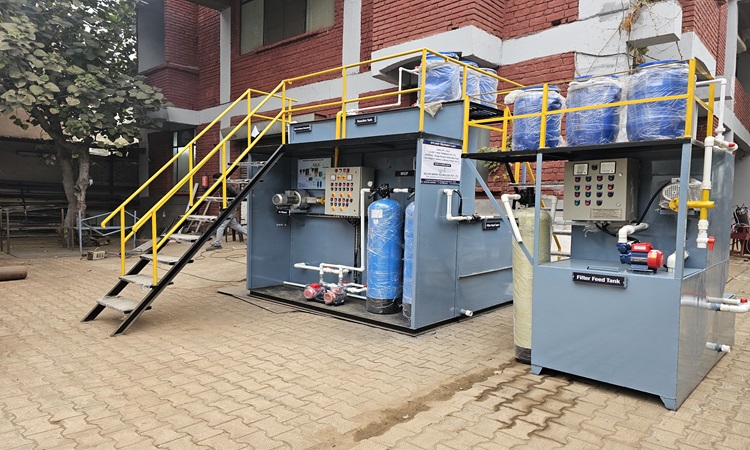
Water scarcity and pollution are two of the most significant environmental challenges in India. With rapid urbanization and increasing population, the demand for freshwater continues to rise, while wastewater generation grows simultaneously. Educational institutions such as colleges generate large volumes of wastewater from toilets, laboratories, hostels, cafeterias, and landscaping. If untreated, this wastewater contributes to environmental degradation, health hazards, and water shortages.
To address this, Sewage Treatment Plants have become essential infrastructure in colleges. Among various types, packaged STP plants are increasingly preferred due to their efficiency, compact design, low operational cost, and ease of installation. This article explores packaged STP plants, their relevance in Indian colleges, technology options, benefits, design considerations, and includes an overview of Kelvin Water Technologies, a leading STP solution provider.
What is a Packaged STP Plant?
A Packaged Sewage Treatment Plant is a prefabricated wastewater treatment system that treats sewage generated from residential, commercial, and institutional facilities. Unlike conventional masonry STPs, packaged plants are manufactured off-site, delivered ready-to-install, and require minimal civil work. They are modular, scalable, and can be customized based on flow rate and effluent quality standards.
In the context of a college campus, a packaged STP typically treats wastewater from multiple sources and produces treated water that can be safely discharged into drains or reused for non-potable purposes such as toilet flushing, gardening, and cooling tower makeup.
Why Packaged STPs are Ideal for Colleges in India?
1. Space Constraints
Many colleges have limited space for large treatment facilities. Packaged STPs are compact and require less footprint, making them suitable for campuses where land is at a premium.
2. Ease of Installation
Packaged STPs come pre-assembled, reducing construction time and civil work. This is advantageous for colleges seeking quick installation without major disruption to campus activities.
3. Cost-Effectiveness
Initial investment and operational costs are often lower than traditional STPs. Energy-efficient designs and automated control systems further reduce utility costs.
4. Compliance with Regulations
India’s Central Pollution Control Board (CPCB) and State Pollution Control Boards mandate specific discharge standards for effluent quality. Packaged STPs can be designed to meet these norms consistently, helping colleges avoid fines and legal issues.
5. Water Reuse Potential
Treated wastewater from packaged STPs can be reused for landscaping, flushing, and cooling, significantly reducing the freshwater demand of the campus.
Key Technologies Used in Packaged STP Plants
Various technologies are deployed depending on the sewage quality, flow rate, and reuse requirements. The most common ones include:
1. Activated Sludge Process (ASP)
This is a biological process where microorganisms degrade organic matter in aeration tanks. It is effective but requires more space and energy for aeration.
2. Extended Aeration System
A variation of ASP, extended aeration uses longer retention times and reduces sludge generation. It is suitable for smaller plants and educational institutions.
3. Sequencing Batch Reactor (SBR)
SBR operates in timed batches, carrying out aeration and settling in the same tank. It offers excellent treatment efficiency and flexibility, ideal for varying load patterns in colleges.
4. Moving Bed Biofilm Reactor (MBBR)
MBBR uses plastic carriers in the aeration tank to support biofilm growth, enhancing treatment in less space and with lower maintenance. It is energy efficient and scalable.
MBR combines biological treatment with membrane filtration. It produces high-quality effluent suitable for reuse but has higher initial costs and requires skilled operation.
Design Considerations for College STP Plants
1. Wastewater Characterization
Understanding the volume and characteristics of sewage is critical. Colleges with hostels, cafeterias, and laboratories may generate high organic loads and variable flows.
2. Flow Rate and Population Equivalent
Design capacity is based on the number of students, faculty, and staff, and peak usage times. Adequate sizing ensures consistent treatment performance.
3. Effluent Quality Standards
Effluent must meet CPCB norms for BOD, COD, TSS, pH, and fecal coliform before discharge or reuse. Selection of appropriate technology ensures compliance.
4. Land Availability
Space constraints influence the choice of technology. Compact systems like MBBR or SBR are preferred for limited land.
5. Operation & Maintenance (O&M)
College administrations must consider ease of O&M. Automated systems with remote monitoring reduce the need for specialized staff.
6. Reuse Strategy
Determining reuse applications (e.g., horticulture, flushing) helps in designing post-treatment components like disinfection or tertiary filtration.
Benefits of Packaged STP Plants for College Campuses
1. Environmental Protection
Treated wastewater reduces pollution of local water bodies, protecting ecosystems and groundwater quality.
2. Sustainable Water Management
Reuse of treated water reduces freshwater demand, crucial in water-stressed regions of India.
3. Economic Savings
Long-term savings on water procurement and sewage discharge charges benefit institutional budgets.
4. Educational Value
On-site STP plants offer learning opportunities for environmental science, engineering, and sustainability programs.
5. Social Responsibility
Installing STPs demonstrates commitment to sustainability, enhancing institutional reputation and community relations.
About Kelvin Water Technologies
Kelvin Water Technologies is a prominent Indian company specializing in advanced wastewater treatment solutions, including packaged STP plants for institutional, industrial, and municipal applications. With a strong engineering foundation, KWT focuses on sustainable water management technologies that deliver high performance, reliability, and cost efficiency.
1. Expertise in STP Solutions
KWT offers a range of sewage treatment plants tailored to the needs of colleges, universities, hostels, and residential campuses. Their designs incorporate modern biological treatment technologies such as MBBR, SBR, and MBR to ensure robust performance under varying load conditions.
2. Customization and Modular Design
Recognizing that every campus has unique wastewater characteristics and space considerations, Kelvin Water Technologies provides customized STP configurations. Their modular systems allow easy scalability for future expansion.
3. Turnkey Implementation
KWT handles end-to-end project execution—right from site survey, design, fabrication, installation, to commissioning and O&M support. This turnkey approach reduces the burden on college administrations.
4. Focus on Sustainability
Kelvin Water Technologies emphasizes energy-efficient operations, reduced sludge generation, and water reuse solutions. Their treatment plants are optimized for low life-cycle cost and minimal environmental footprint.
5. Service and Support
Post-installation support, periodic maintenance, and remote monitoring services ensure that the STP operates smoothly with minimal downtime. Training for college staff on operation and basic troubleshooting is also provided.
Case Study: Implementation in a College Campus
Consider a medium-sized college in India with a student population of 3,000 and staff. The campus generates approximately 150,000 litres per day (LPD) of wastewater. The college opted for a packaged MBBR STP designed and installed by Kelvin Water Technologies.
Objectives
- Treat sewage to meet CPCB discharge standards
- Reuse treated water for toilet flushing and landscaping
- Minimize energy and maintenance costs
Outcomes
- Installation completed within 60 days
- Treated water quality consistently met standards for reuse
- Freshwater consumption reduced by 40%
- Maintenance simplified via automated control systems
Conclusion
Packaged STP plants are a sustainable solution for colleges in India facing water scarcity, regulatory requirements, and environmental responsibilities. They offer compact design, lower costs, and efficient water treatment and reuse potential. With providers like Kelvin Water Technologies, institutions can deploy tailored STP systems backed by technical expertise, ensuring long-term performance and sustainability.
By adopting packaged STPs, colleges not only manage wastewater responsibly but also contribute to water conservation, environmental protection, and sustainable campus operations—an essential step toward a greener future.