Industrial Organic Waste Composter Machine in India
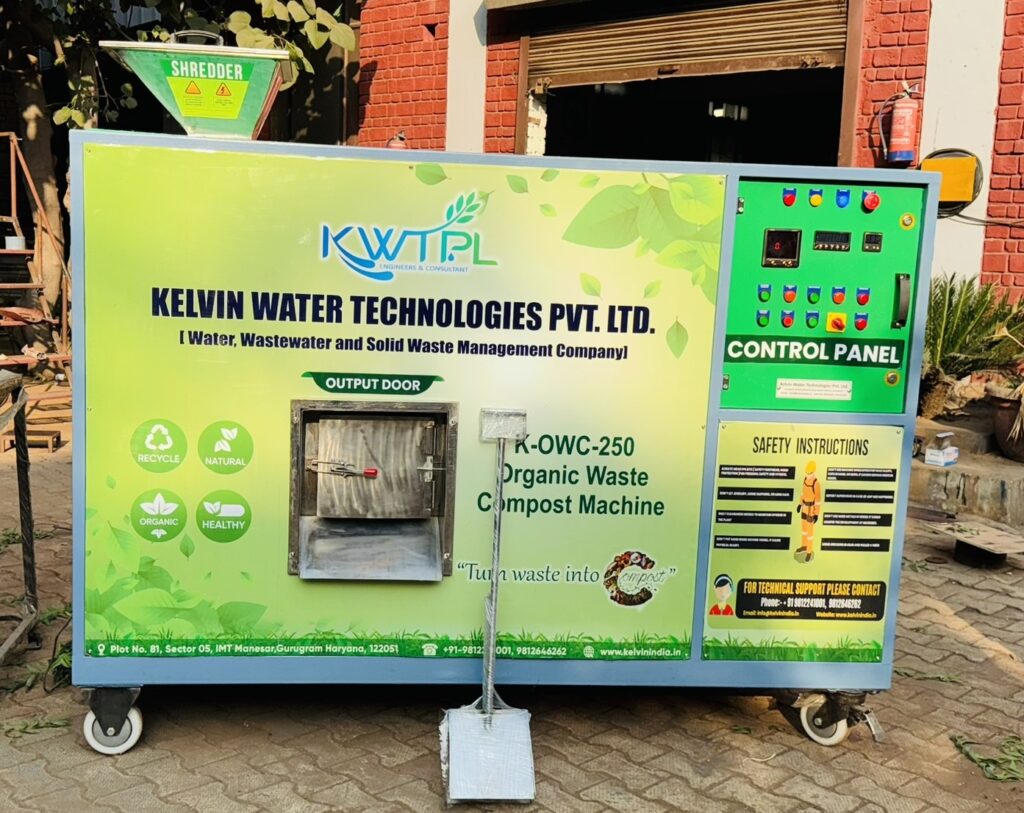
India is witnessing rapid industrial growth, urban expansion, and an increasing focus on sustainable waste management. Among the many advanced waste-handling technologies available today, Industrial Organic Waste Composter Machines have emerged as a reliable, eco-friendly, and cost-effective solution for processing large volumes of biodegradable waste. These machines are widely used in industries, commercial establishments, municipal bodies, and large institutions to convert food waste, garden waste, and organic residues into nutrient-rich compost.
Understanding Industrial Organic Waste Composter Machine
An Industrial Organic Waste Composter Machine is a fully or semi-automatic system designed to treat large quantities of organic waste efficiently. The machine decomposes organic waste using microbial activity, controlled aeration, temperature management, and mechanical mixing.
In India, these machines are built to handle waste generated by large facilities such as food-processing units, hotels, malls, corporate offices, housing townships, and municipal bodies. The primary objective is to reduce waste at source and transform it into compost, thereby preventing landfill overload and contributing to environmental sustainability.
How the Composter Machine Works?
Industrial composter machines operate on the principle of aerobic decomposition, which involves the breakdown of organic matter using oxygen and microbes. The process typically includes the following stages:
- Waste Segregation & Shredding
Organic waste is collected, sorted, and shredded to reduce its size and increase the surface area for rapid decomposition. - Feeding the Machine
The shredded organic waste is fed into the composter chamber. - Microbial Decomposition
Natural microbes break down the waste in a controlled environment. Industrial composters often use special enzymes to speed up the process. - Mixing & Aeration
The machine ensures proper mixing of waste and continuous aeration to maintain ideal conditions. - Deodorization
Advanced industrial composters include activated carbon filters or bio-filters to remove foul odours. - Compost Formation
Within 24–48 hours (depending on machine type), the waste is converted into stable, odour-free compost. - Curing & Use
The compost may be further cured for 1–2 weeks before being used in gardening, landscaping, and agriculture.
Types of Industrial Organic Waste Composters in India
India offers a variety of industrial composting systems depending on capacity, automation, and technology:
1. Fully Automatic Organic Waste Composter
These machines require minimal human intervention and operate using heating systems, bio-culture, and automated mixing. Ideal for large-scale facilities.
2. Semi-Automatic Organic Waste Composter
In these systems, some processes like shredding or manual mixing may need operator involvement.
3. In-Vessel Composting Systems
Closed, cylindrical, or rectangular vessels where waste decomposition occurs in a controlled environment—best for industrial and municipal-scale operations.
4. Continuous Organic Waste Converters
Designed for 24/7 operation where waste can be added anytime and compost can be removed simultaneously.
5. Composting + Dehydrator Combination Models
These machines reduce waste volume significantly by controlled heating before composting begins.
Key Features of Industrial Composters in India
Businesses choose industrial organic waste composters for their advanced features, such as:
- High processing capacities ranging from 50 kg/day to 5 tons/day
- Fully insulated stainless-steel body to maintain temperature
- Intelligent control panel with PLC system
- Odor control mechanism
- Low operational cost and energy consumption
- Efficient shredding and mixing mechanism
- Safe, hygienic, and user-friendly operation
- Composts waste within 24 hours to 5 days depending on the system
- Long life and low maintenance requirements
Industrial Applications of Organic Waste Composter Machine
Industrial composters have become an essential component in various sectors across India:
- Food Processing Industries
- Hotels & Hospitality Chains
- Restaurants and Cloud Kitchens
- Large Corporate Offices
- Residential Townships & Gated Societies
- Educational Institutions
- Temples & Religious Places
- Malls & Supermarkets
- Hospitals
- Municipal Solid Waste Management Sites
- Agricultural Farms
Benefits of Using Industrial Organic Waste Composters in India
1. Drastic Reduction in Waste Volume
Industrial composters reduce waste volume by 70–90%, minimizing landfill burden.
2. Cost Savings
Organizations save on transportation, disposal, and labour costs, making composting an economical long-term solution.
3. Compliance with Environmental Norms
Machines help industries meet pollution control standards and avoid penalties.
4. Production of High-Quality Compost
The compost produced can be used for landscaping, gardening, farming, or even sold commercially.
5. Odor-Free and Hygienic Waste Processing
Advanced deodorizers and closed systems ensure clean and odor-free operation.
6. Quick Processing Time
Depending on the model, compost can be created within 24–48 hours, making operations efficient.
7. Contribution to Sustainability
Industries reduce carbon emissions, promote recycling, and support green initiatives.
Why Industrial Composters Are Growing Fast in India?
India generates over 65 million tonnes of municipal solid waste annually, with nearly 60% being organic. Industrial and institutional sectors are among the largest contributors. Due to growing environmental awareness, stricter waste regulations, and rising landfill costs, industries are now shifting to onsite composting solutions.
The push for Zero Waste to Landfill (ZWL) and Corporate Social Responsibility (CSR) initiatives further accelerates the adoption of these machines.
Choosing the Right Industrial Organic Waste Composter
When selecting a machine, industries must consider:
- Daily waste generation capacity
- Type of organic waste
- Space availability
- Budget and operational costs
- Level of automation required
- Local climate and environmental conditions
- After-sales service and support
Conclusion
Industrial Organic Waste Composter Machines in India are transforming the waste management landscape by offering an effective, economical, and eco-friendly solution to handle biodegradable waste. With India’s growing focus on sustainability and waste reduction, these machines are becoming essential for industries and large institutions. They help reduce landfill load, generate useful compost, comply with environmental laws, and support a greener future.